Iceland Divide
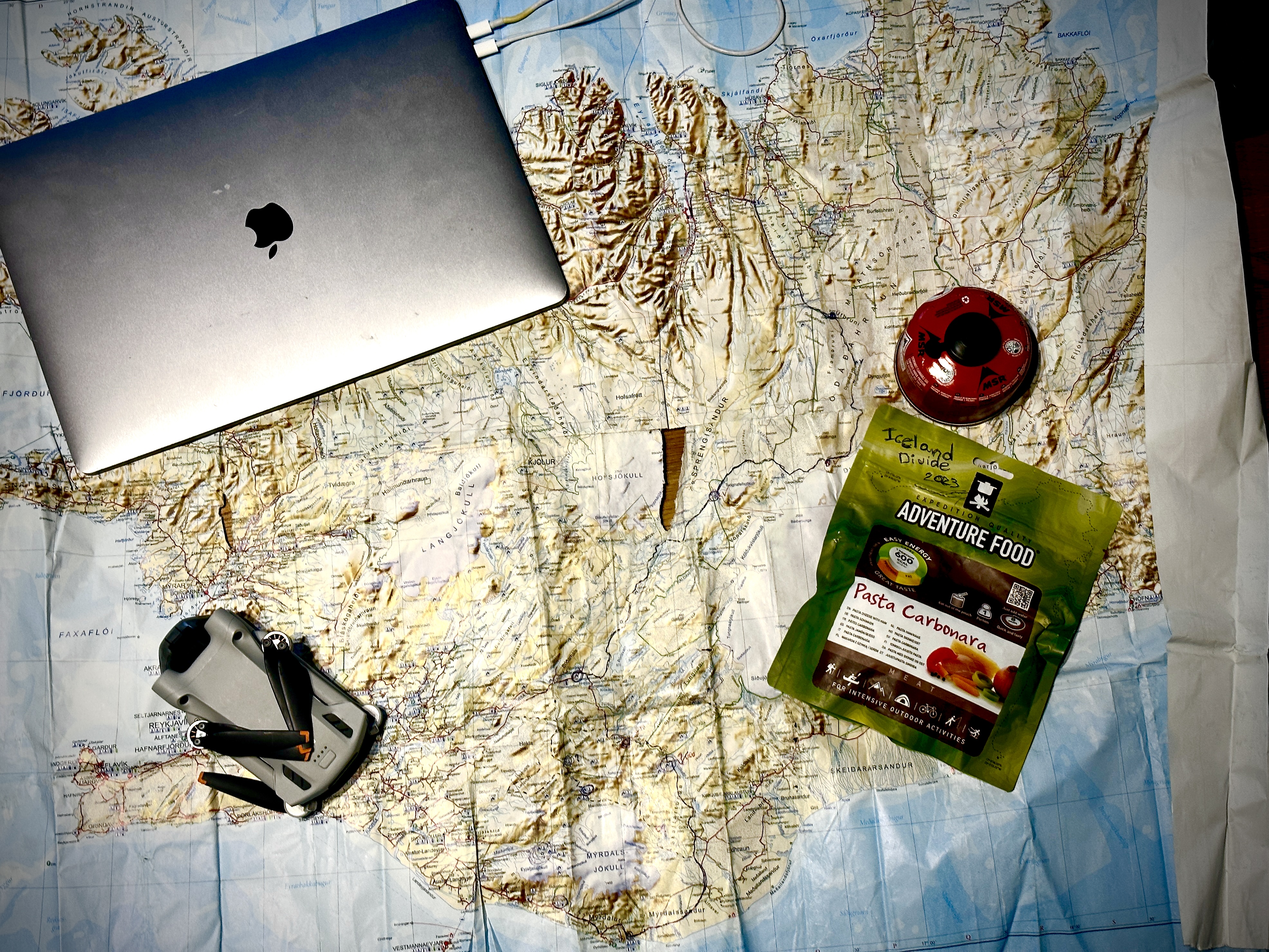
Few days ago, I embarked on a challenging self-supported bikepacking journey across Iceland which turned to be a solo adventure. It included navigating Iceland deserts, crossing numerous rivers, and contending with unpredictable weather. Read about my adventure in the post below.
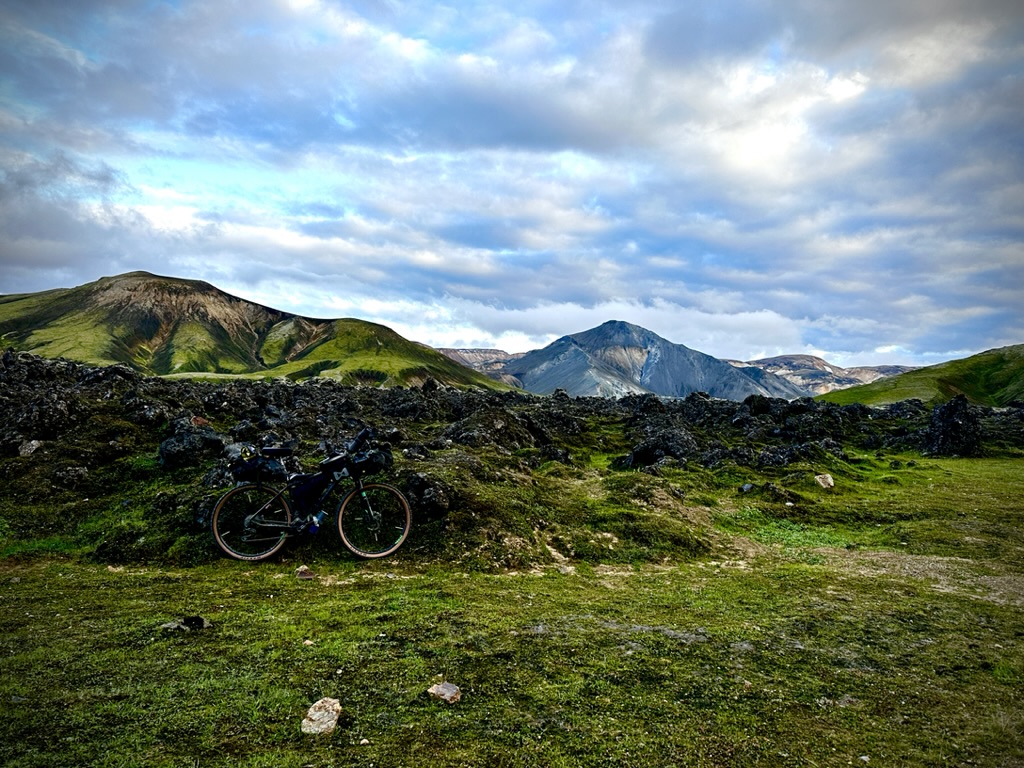
Few days ago, I embarked on a challenging self-supported bikepacking journey across Iceland which turned to be a solo adventure. It included navigating Iceland deserts, crossing numerous rivers, and contending with unpredictable weather.
My route, inspired Iceland Divide route from Bikepacking.com: it started in Akureyri, led me through remarkable landscapes such as the Sprengisandur desert and along the F26 and F208 roads, iconic destinations like Godafoss, Landmannlaugar, and Hólaskjól and finished in Vik: read about my adventure in the post below.
Day 0 or ‘Well, it’s always better to rest fully and recharge before embarking on such an adventure’
It was an incredibly Saturday!
During the week leading up to my trip, I tried to wrap up all my work before the vacation in quite a tempo. In the evenings, I was busy making fixes to Athlon. As a result, my bike was packaged, to put it mildly, not as I would pack it normally.
I spent the night driving; we took a Car share from Tallinn to Riga. The idea was that the direct flight from Riga had a lower chance of losing our bikes, and the drop-off fee for a different country was still cheaper than flying from Tallinn. It was however a bit more demanding both physically and emotionally.
Upon arrival at the airport, I had two tasks: drop off the car and do the Athlon release before the departure. Both were accomplished successfully. Then I joined Denis at the window where we noticed our bike boxes had already reached the airplane. The real question was: would they be loaded?
We had a reason to be anxious about whether our bikes would make it. We remember our Scotland trip where only two out of three bikes arrived.
Airport staff handled things well this time, and seeing our boxes slide into the airplane via the conveyor belt, we headed to the gate with a sense of relief.
In the airplane, exhausted from the Tallinn-Riga drive, I fell asleep. Upon landing, we collected our luggage and two (weeee!) bike boxes. Denis picked up our rented station wagon that had enough room for our boxes and luggage. I, however, was squeezed in a bit due to the suitcase behind my seat. Denis, the driver to Akureyri, had a better seating situation, which is of course fair.
The plan in Reykjavik: pick up new boxes for our return journey from a bike shop (as arranged) and drop them off at the hotel where we’d be staying on the way back (also as arranged).
However, on Saturdays in Iceland, things are less predictable. Despite the business hours, the bike shop we had an agreement with was closed. Their neighbors just shrugged, saying that the shop’s staff works when they feel like it.
We had lunch at KFC, then bought portable gas canisters, and headed to the hotel to drop off our luggage. The hotel was closed, and they had no intention of opening it for us. All this again no matter of arrangement we have had before with them.
So we had neither boxes nor a place to store our stuff.
Another shop helped us with the boxes. After failing to find a locker for our suitcase—we needed longer-term storage than the 4-day maximum offered—we moved to another hotel that boldly charged us ~200 euros. Finally, it was time to head north.
We rushed, as we had to return the car that day. The drive was captivating, and eventually, we reached Akureyri. We hauled our bikes into the room and headed to return the car. It appeared that no one actually was expecting it — the airport station in Akureyri was closed. It was unclear where to leave the keys. After calling Hertz, Denis figured out how to leave the car, while I figured out how to use Hopp — the mobility app in Iceland that includes scooters, taxis, and car sharing. We rode scooters from Akureyri airport back to the hotel and quickly went to sleep.
Day 1: The Start
We wake up in a hotel in Akureyri. The room, which resembles a dormitory, turns into a bike workshop where we unpack and assemble our bikes. Time is short before checkout, so the bike workshop moves to the lawn in front of the hotel.
At the last moment, I catch a bit of uncertainty about my gear. I consider stopping by Sports Direct to buy a down jacket, as well as a paper map, a lighter, tea, and some withdraw some cash.
As a result I don’t buy the jacket — the local Icelandic sales consultant convinces me I’ll be fine without it.
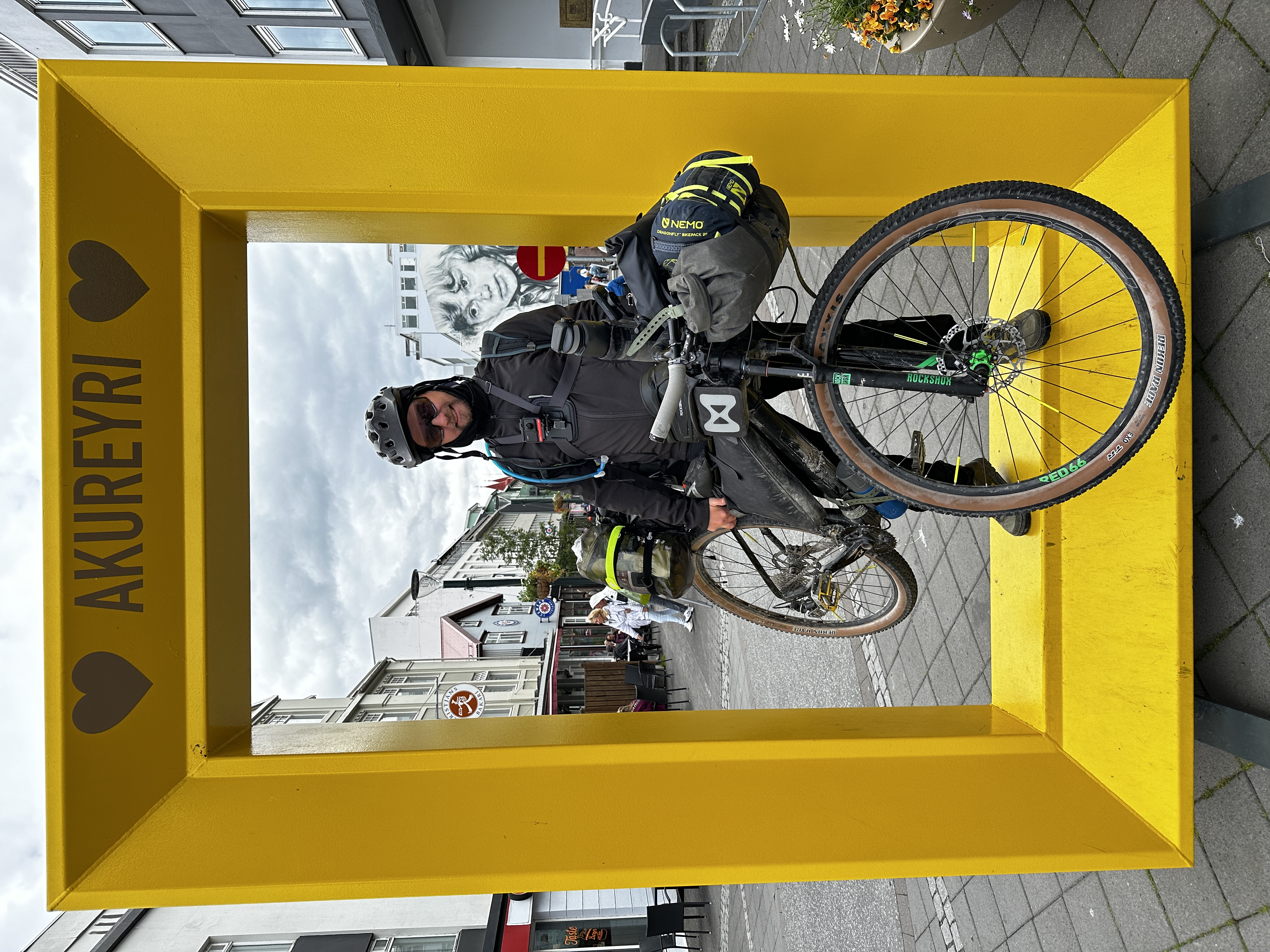
Before setting off, we charge our gadgets, power banks, and ourselves with burgers. We snap a photo in a yellow frame and hit the road. Denis loosens up with the first few climbs after a long absence from cycling, while my back, strained by the commute to Akureyri, tells me, “Hey, slow down!”
The only sensible thing for me to do is reassess my current abilities and realize I won’t make the first planned 100 km. Denis is anxious about this pace affecting our planned route, so we decide to ride solo. Denis will continue the day, while I’ll cut it short and acclimatize in a hotel in Godafoss.
Day 2: The Continuation
At Godafoss, I fly my drone, closing a chapter: six years ago, Godafoss claimed my old drone with a GoPro and a priceless memory card. Godafoss, with its cascades and rugged rocky shores, is impressive, but I don’t linger. I follow Denis’s trail toward our first night’s stop. I know my stops will differ from his. He’s 50 km ahead, and I plan to ride more than 50 but less than 100 km. Along the way, there are three houses suitable for an overnight stay. Dyngjufell is my favorite (79.1 km, 650 meters elevation gain). The first hut on my way is the one where Denis stayed overnight is my lunch stop.
In the beginning, while riding against the flow of Skjálfandafljót, I notice the variety of bird songs and am amazed by them. A sunny, windless day — a perfect start for the journey. I pass someone’s farm with lots of rusty machinery and imagine Denis riding through here in the twilight — probably quite creepy. In a nameless hut where Denis spent the night, I brew coffee, have an adventure pack, and move on. Until now, everything has been very calm and relaxed.

But soon enough, the Iceland that my consciousness has been preparing me for slowly begins to reveal itself. The first lava fields with bumps, the harsh deserts covered in sand and stones — it’s all part of my first full day of riding. My front bag setup starts to slide down on the first bumps — I’ll have to do something about this.
Riding becomes barely possible between the first and second huts, so I push my bike. A poorly marked hiking trail doesn’t help me, nor those who came before. There’s a myriad of wandering tracks through the desert — I try to stick to my route, mostly using a compass to find my way to the nearest road. It should be close, and likely popular, as it leads to Mývatn and Askja. My attempts to follow the track aren’t always successful: I ride, dismount, push, mount again, and ride. After passing Botni hut and realizing I’m somewhat lost, I sit down and then suddenly spring up in shock, tearing my Goretex pants in not the best spot to tear them. The reason for my shock is that the my phone mount where my phone was just five minutes ago is now empty.
Luckily, I find my phone. I’ll omit the anxiety and swearing. My Garmin was still connected to the phone, which somewhat reassured me — it wasn’t too far. Upon reaching the place where I last dismounted, while contemplating options like proceeding with only my Garmin and paper map, or going back to civilization, or “why on earth I had a black phone case instead of a bright pink Barbie-themed” so I could spot it on the black sand, I find the phone. I head back to my bike and, feeling relief, head straight for the road.
I don’t have much riding left, but my water supply is short; thankfully, there will be a river with good water on the way to Dyngjufell. Upon approaching the hut, I see a river and a tent camp next to it — the hut is likely fully occupied. Remembering my sore back, I pitch my tent on a perfectly flat porch and immediately crash, looking forward to waking up to a beautiful view.
Day 3: Sand and “Ride So Fast You Almost Exhaust the Horse”
Hello, Sprengisandur! Sandur means “sand”, and Sprengi refers to “almost exhausting a horse”. From Dyngjufell, in its meditative monotony, begins a desert with an endless view of Vatnajökull. I meet the night residents at the hut — Icelanders who are in a group of sixteen heading on to Mývatn.
I unfold my paper map, and the local tourists, with whom I’ve had a pleasant conversation, point out a few spots on the map that I carefully circle for future. What surprises me is that my route with Denis goes through places the locals didn’t really mention. Landmannalaugar and Hólaskjól, for example, ended up circled on my map.
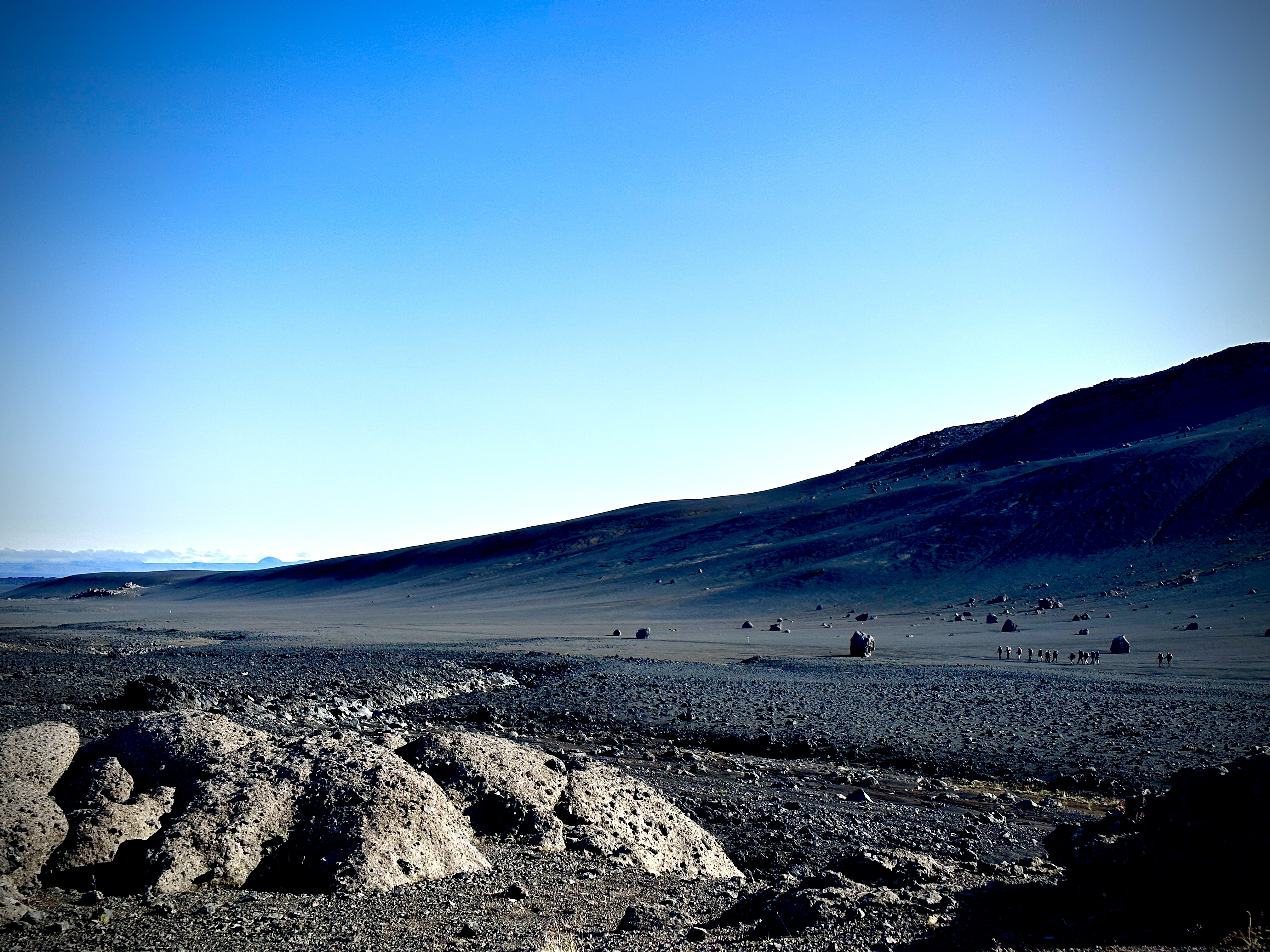
I set off, tightening my bags a bit. My goal for today is the most remote hut — Kistufell, near the highest point on the route. It’s about 50 km away, which, unfortunately, turns into an endless readjustment of the bag on my handlebars. Constantly slipping down, it rubs against the front wheel, especially troubling on the downhills where I have to stop multiple times to tighten it.
To make things worse, Denis sends news that there’s no water at Kistufell. And I was heavily relying on the opposite.
On the way, some Swiss athletes pass me — I expect to see them later in the same hut.
I reach the toughest climb of the three days, where I’m caught in the rain. A firm resolve to permanently fix the hanglebar bag issue at Kistufell takes over. Adjusting it on a rough hike-a-bike trail in the rain is stressful and does not add any good to the adventure.
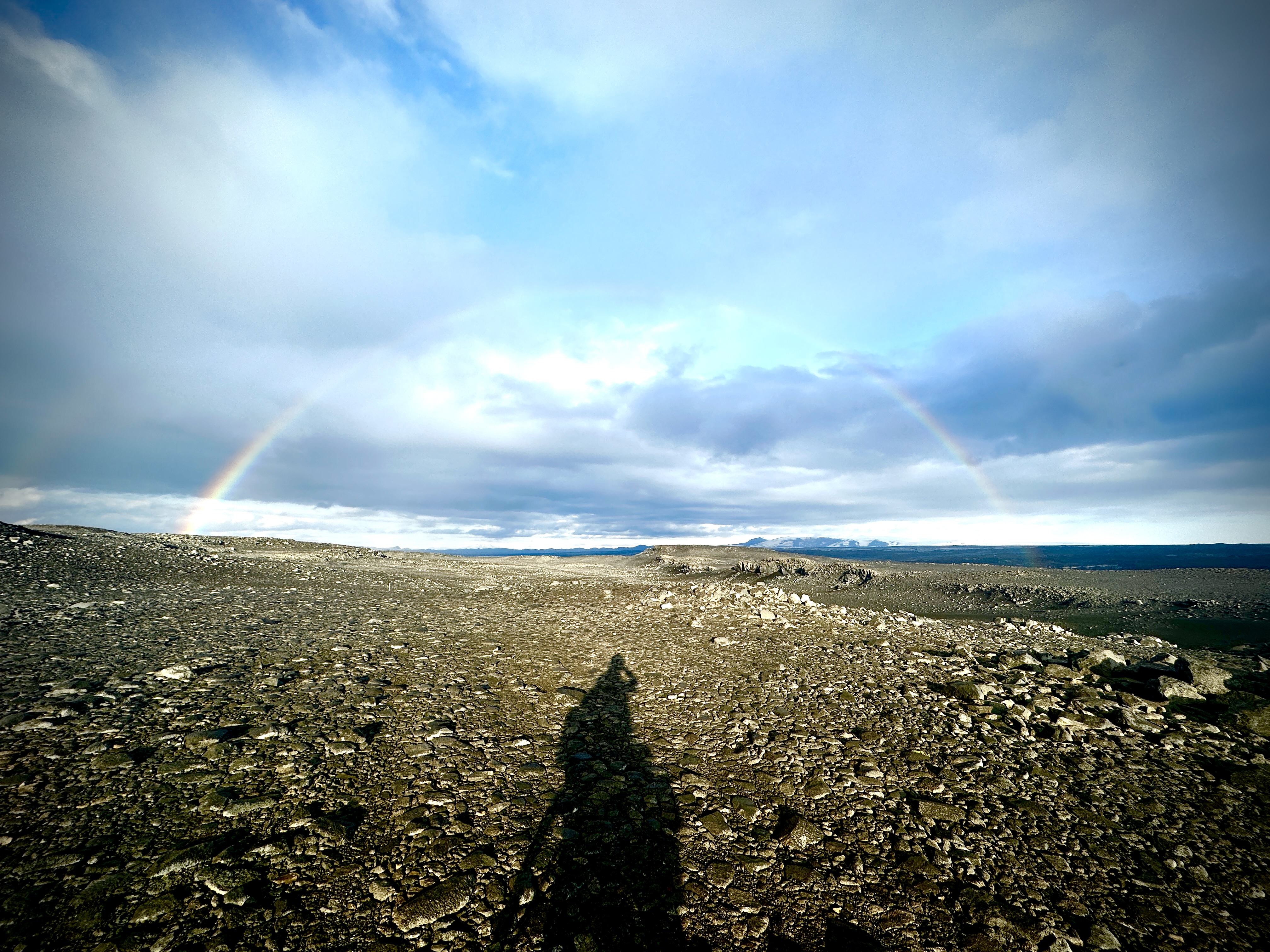
I realize that due to the cold, vibration, and something about my grip, my fingers are significantly weakened. It’s surprising how much you have to do with them: grab tools, tighten bags, close bags — all became increasingly difficult.
Just after sunset, I reach the hut. There are water, tools, warmth, and Swiss athletes.
I go to sleep.
Day 4: Continuing to Push the Horse, Now also a Nighttime Edition
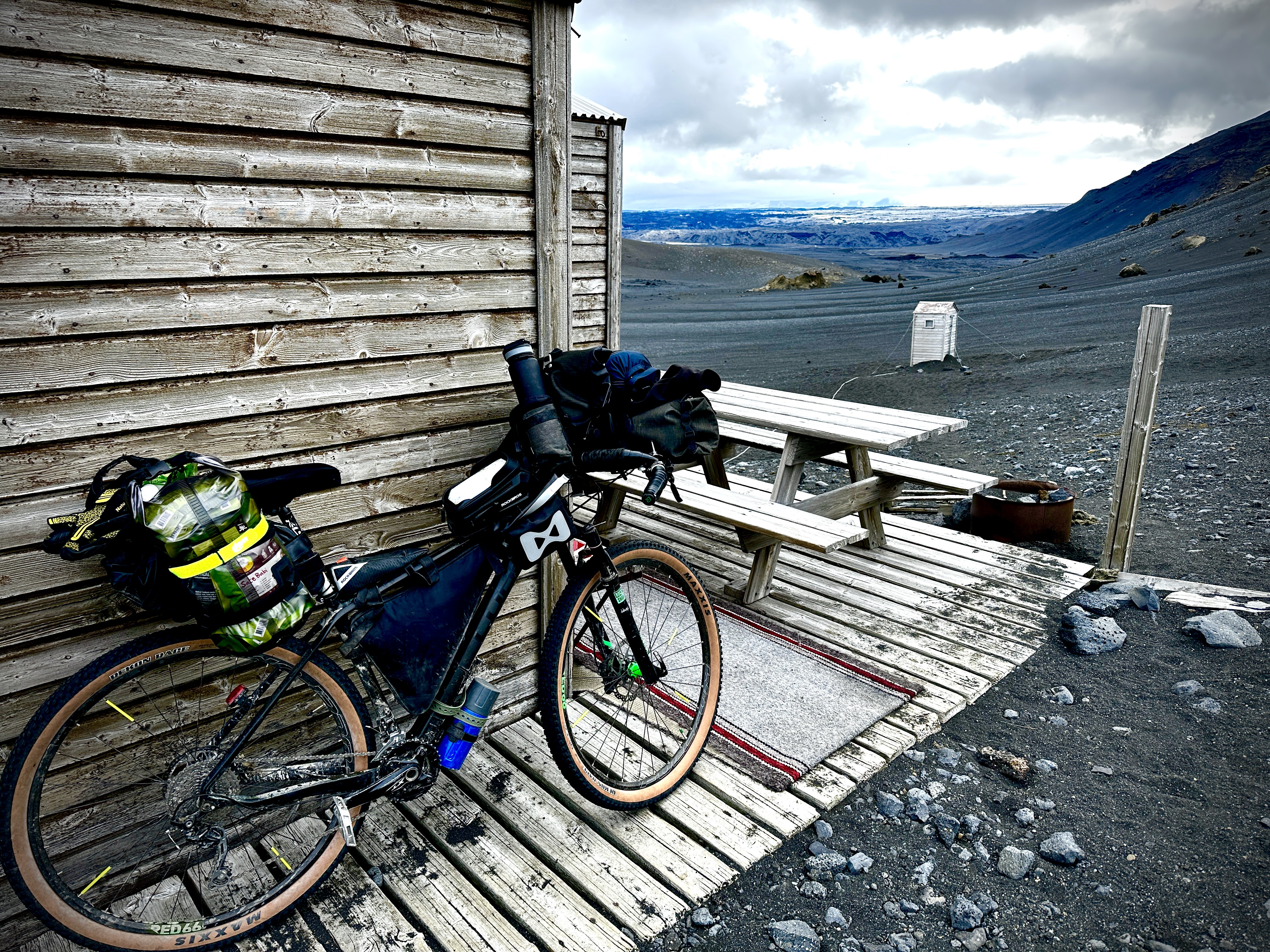
I wake up eager to fix issues causing unnecessary stress. First up is the saddle height, which I lower to reduce weight on my hands. I find some abandoned socks in the hut, wrap them around my handlebars for better vibration absorption.
Trying to tighten my bag’s attachment turns into a fiasko. A bolt breaks from over-tightening. Pliers and a spare bolt come to the rescue.
I assume today’s ride will be shorter, so I take my time with repairs. The Swiss have long since departed. Content, I finally hit the road after noon.
I encounter my first 4x4 vehicles, some almost Mad Max-like, and chat with the drivers. Ahead are the first river crossings.
My initial river crossing surprisingly comes with an audience of rescue team. They’re patrolling the huts and stop to watch me cross. A bit embarrassed by the attention, I navigate the river, snap a selfie with them, and continue.

Soon my favorite bag attachment starts failing again. An hour and a half in, I puncture my rear tire on an unfortunately exposed and flat area welcoming any wind. Thankfully, there’s a large stone to prop up the bike. One of two spare tubes is now used. I also eat lunch here.

My goal is Nýidalur, and it seems I’ll arrive even later than I did at Kistufell. I’ve accepted this, but another twist awaits me. During sunset, while crossing another river, I hear a metallic “zzzang”
That sound isn’t a good sign — well now there’s nothing to attach my saddlebags to.
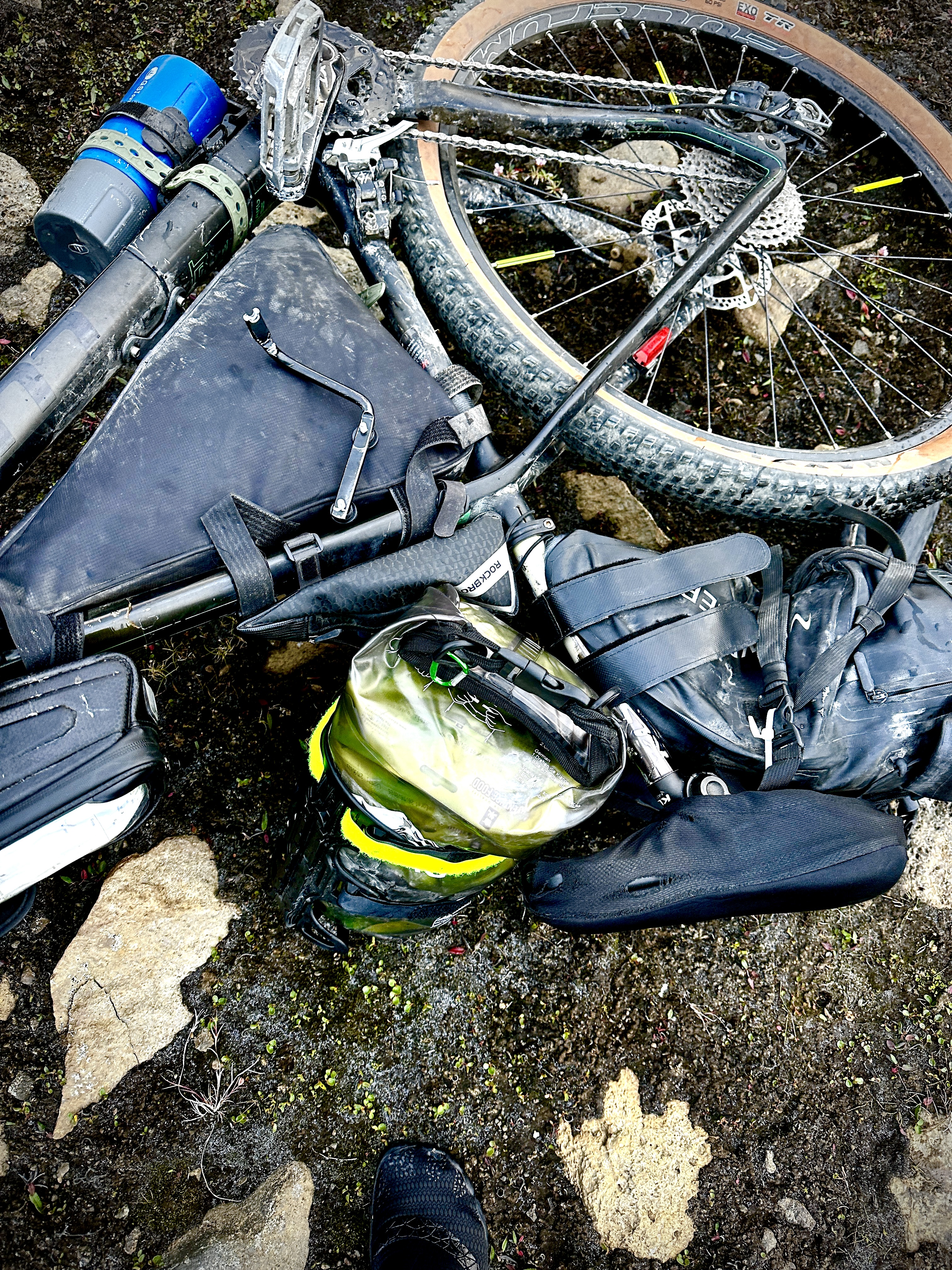
I somehow rearrange everything and secure it with straps.
It gets dark; I can’t see without a flashlight. The next two rivers are crossed in the dark. To make things worse, fog descends, making fast descents impossible due to limited visibility. I arrive at Nýidalur just as everyone else is starting their day—at dawn. I spot the Swiss neighbours from Kistufell having their breakfast — happy for them, I drag myself to a bunk and fall asleep. I decide it’s best to stay an extra night and set off the next morning.
Day 5: In the rehab
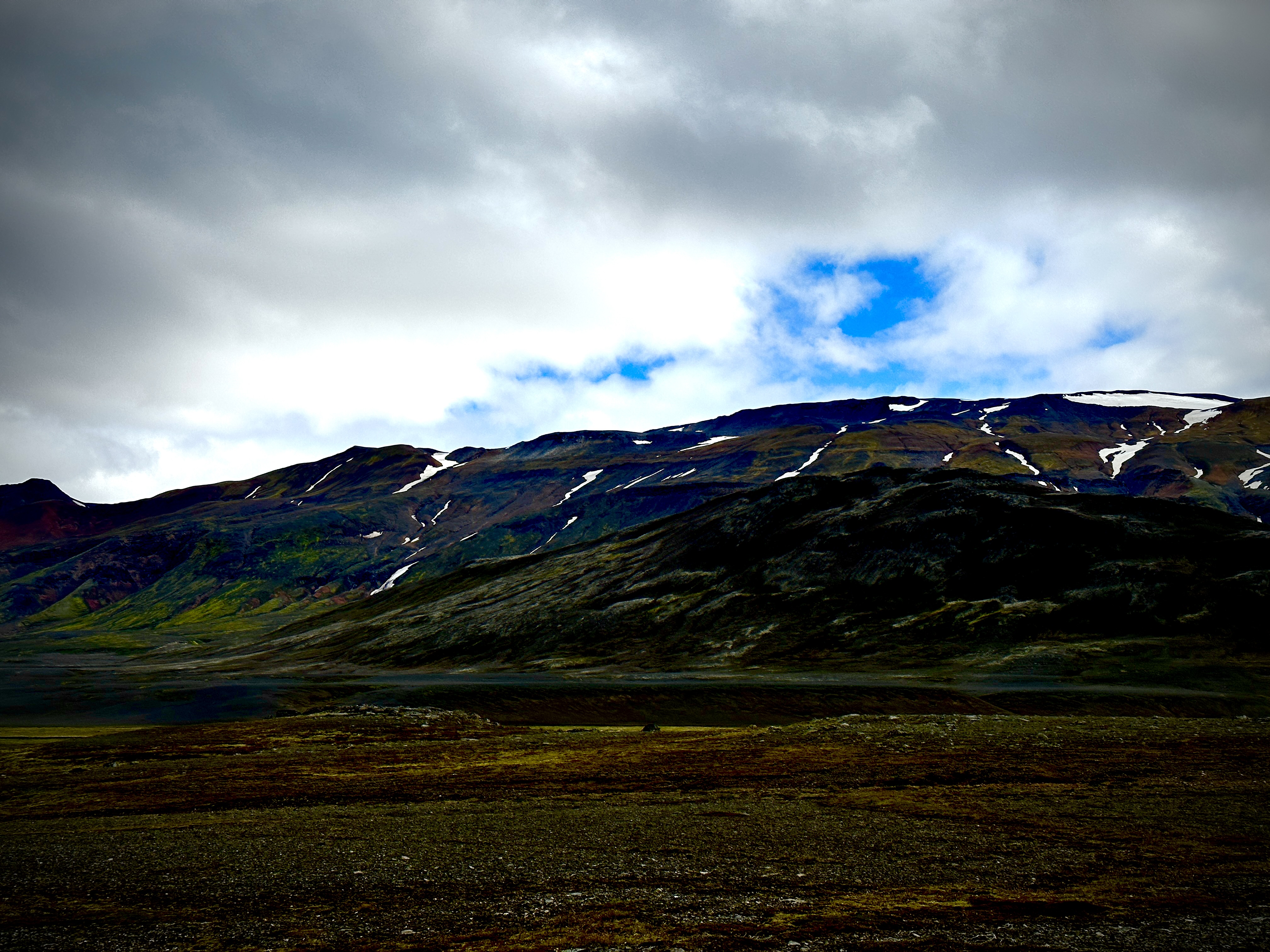
I wake up and head to the inhabitants of Nýidalur, where the caretakers of the huts and national park rangers are based.
By evening, the area fills up with hikers, cyclists, and especially jeep tourists. During the day, it’s quiet. I’m offered free coffee. The huts are well-equipped with two well-appointed kitchens, hot water showers, a small shop — even electricity twice a day when the generators are on. A large poster on the wall highlights the area’s diverse birdlife.
I take advantage of Nýidalur’s amenities. I go to sleep around 8 PM, aiming to rise early. A group of noisy tourists cooking onion soup doesn’t disturb me — I’m too tired. I fall asleep planning for the biggest stretch yet: 100+ km for the next day.
Here’s the situation:
- The next hut, Vírsalir, 50 km away, is closed (as per park rangers and a message from Denis).
- The wind is shifting to the south, and the remaining journey is mostly southbound (but nothing critical, according to park rangers).
- I have only one spare inner tube left (which turns out to be a repaired one).
- My hands need rest.
- The handlebar bag is mediocre and tend to fall off.
- The rearranged items are not optimally placed, and I’d rather not tinker with the setup again.
- I start considering alternative ways to reach Vík if something goes wrong.
Day 6: Road to the Pitstop
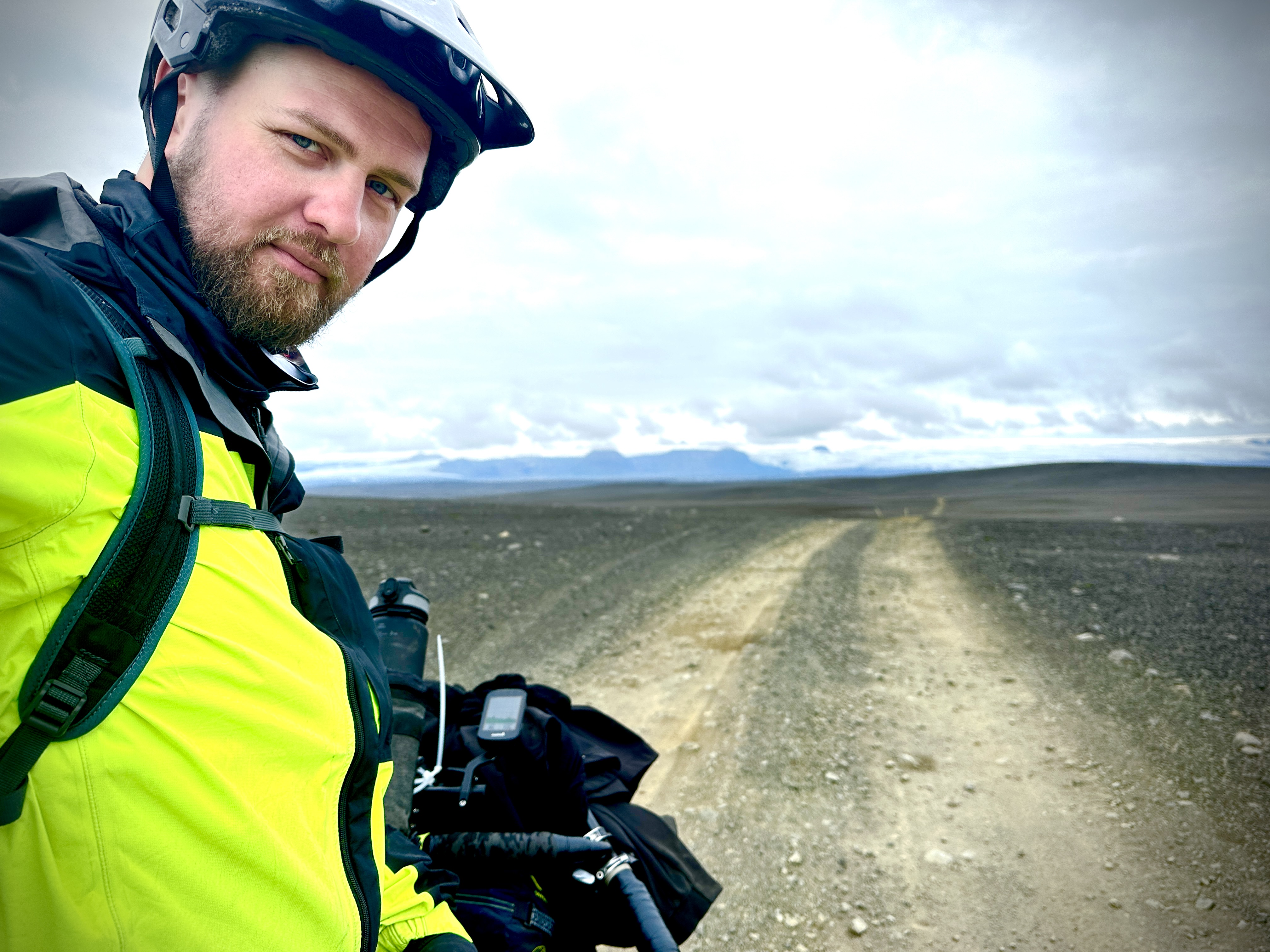
Turns out, road F26 isn’t great—it’s been battered by jeeps and resembles a washboard. Denis, following the advice of fellow bikepackers, had taken a detour on the quieter F208 and suggested I do the same.
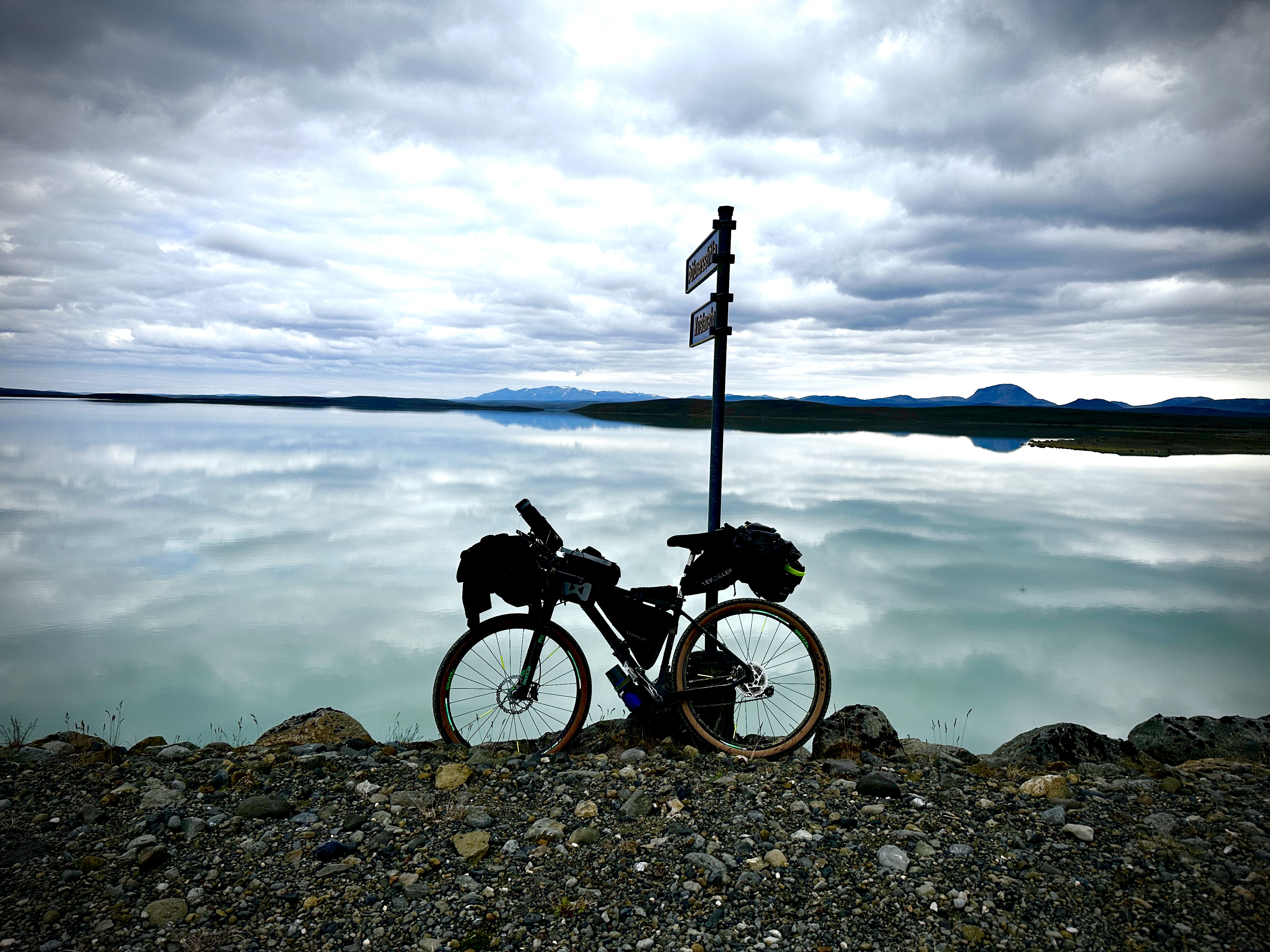
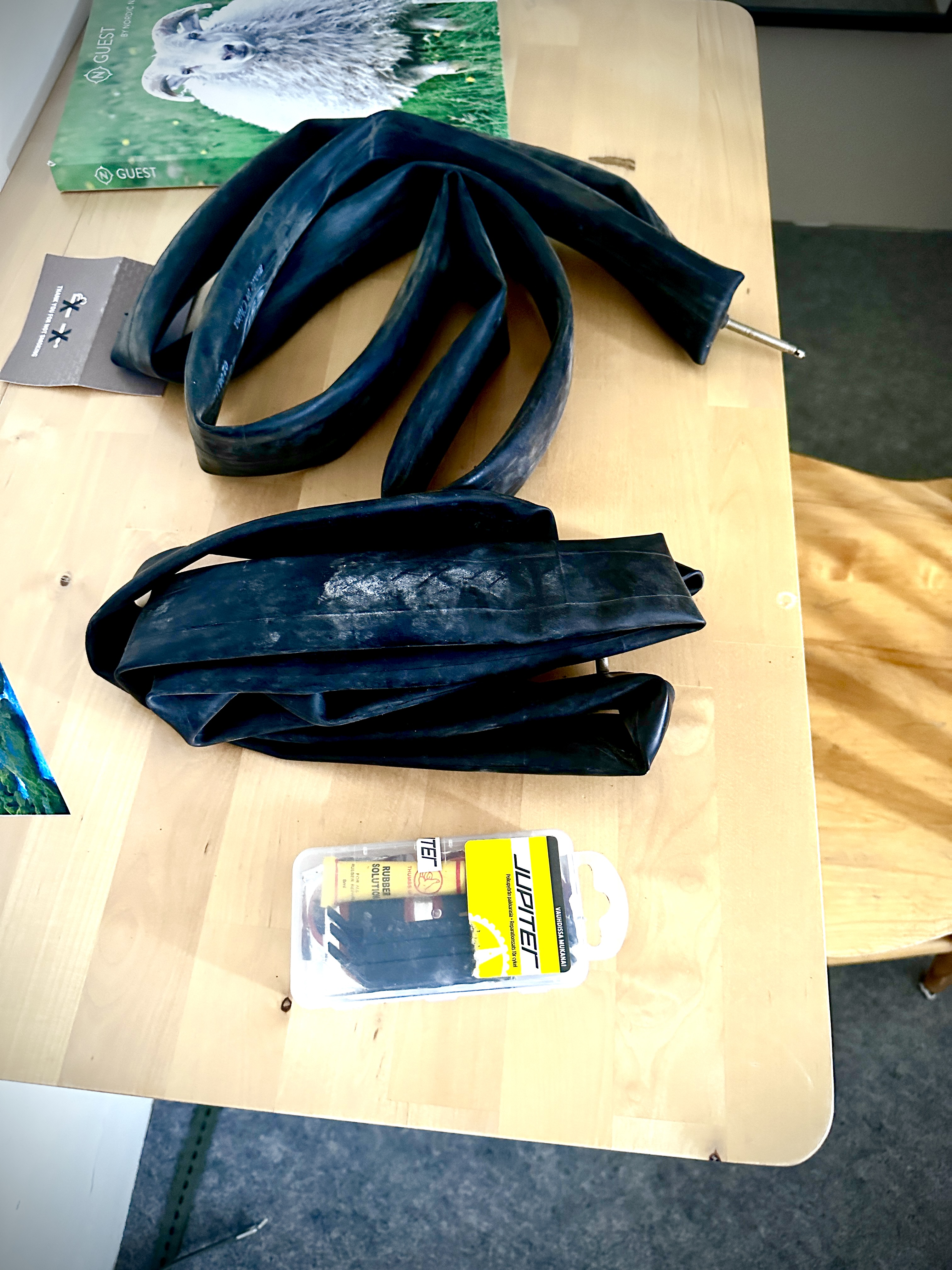
Starting on F208, I was immediately thrilled with the better road conditions, exhilarating descents, stunning reservoirs, and the absence of dust-raising vehicles. That is, until midday, when my front wheel hit a rough spot and de-rimmed, presumably shredding the inner tube to bits. I have one spare to use and I have no more, just a repair kit. The repair of tubes would have to wait until the hotel.
I assess the damage, try to straighten the bent rim, install a new tube, have lunch per my breakdown tradition, and continue on. This time, the weather is perfect for repairs — sunny. Special thanks to Nikolai @nkloga for the moral support and helpful repair advice.
I encounter many cyclists heading north. I chat with two Americans and their local Icelandic guide. It turns out they’re taking an alternative route that locals had earlier recommended. I decide to postpone choosing between this and my original planned route until I reach the hotel.

My leg starts to ache. The weather changes incredibly fast throughout the day. Eventually, I arrive at a paved and blisteringly fast descent leading to the hotel.
Upon arrival, my bike is offered an exclusive garage — I park it in a separate room. I enjoy a tasty meal, fix the tubes in the morning, and make decisions about my next steps.
Day 7: To Landmannalaugar!
To stick to the original route and secure a hut for the night after the hotel, I would’ve had to tackle a grueling 600m ascent in a single day—all against headwinds.
The local alternative through Landmannalaugar divides this ascent conveniently into two 300m stretches. Plus, it features stops at Landmannalaugar with its hot springs and also at Hóleskjol, another location recommended to me on the map.
Nothing extraordinary happens during the day. My bags — especially those up front — are a weak point. By day’s end, I find the ideal way to secure them. There’s a lot of traffic on the way to Landmannalaugar, it’s a mixed blessing. On one hand, the dust kicked up by passing vehicles is annoying. On the other hand, the frequent traffic offers a sense of reassurance that help is nearby if something goes sideways.
Landmannalaugar is a true festival for nature enthusiasts. There are bus-stores, medics, a tent camp, and a cabin filled with tourists who start their daily hikes from here to explore the local beauty. I unwind in the hot springs with a can of beer, bringing the day to a close.
Day 8: The Toughest Day with Cold Winds, Rain, Numerous River Crossings, and a Challenging Ascent — or a Turning Point?
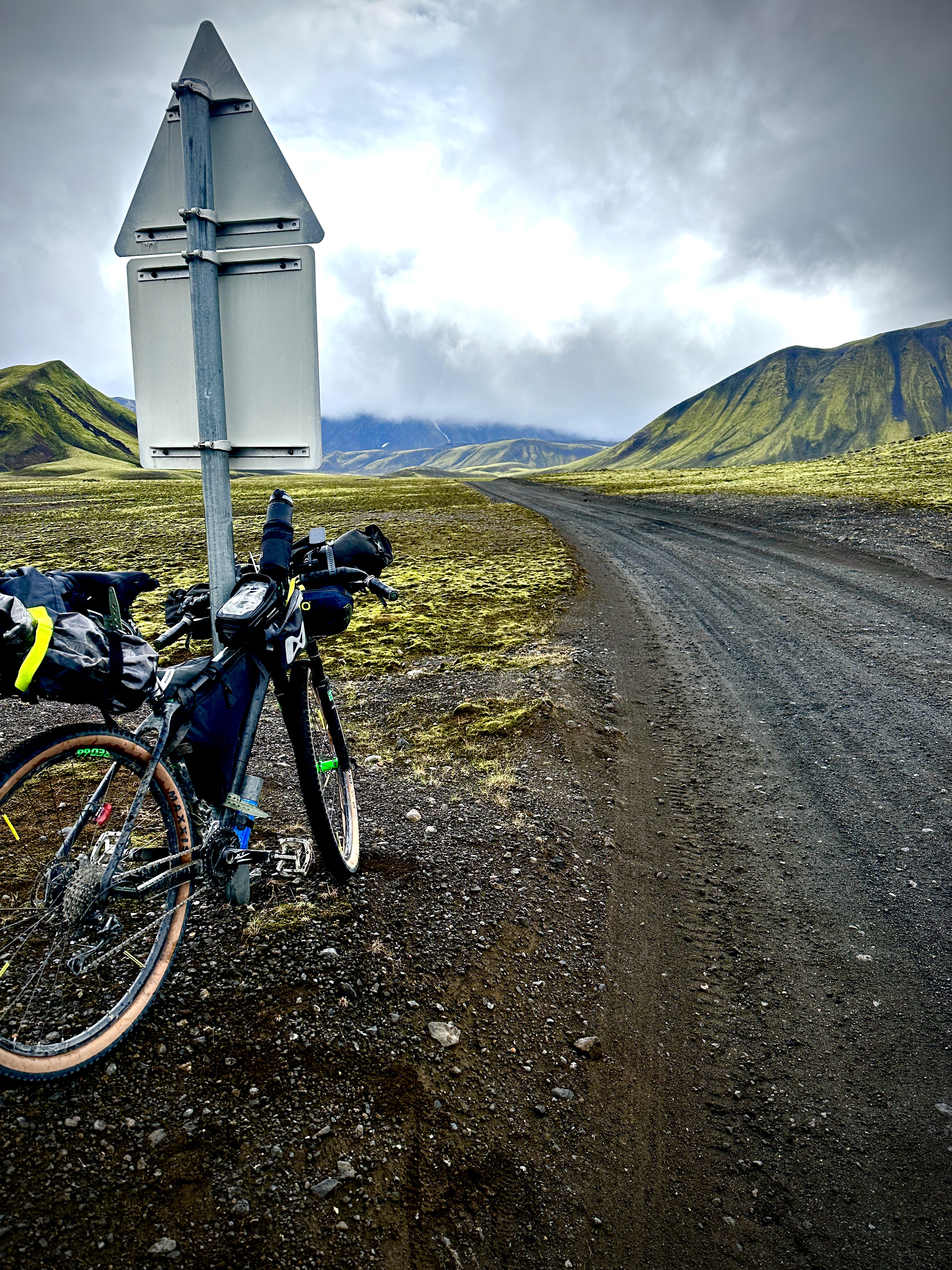
On this day, I finally fix my front setup; a long and awe-inspiring descent awaits me, and I don’t want any distractions. But first, I have to earn it. A half-day battle against all conditions brings me to the descent, after which it feels like I’ve entered a different climate zone — it’s warm and pleasant. Streams and cascades of water flow towards the ocean, and it’s as if I am flowing with them at the same pace — a wonderful feeling. I realize I’m very close now. Just a bit more, and I’ll be able to say, “Despite the setbacks and health, it seems like I’m going to make it to Vik.”

I stop at Hóleskjol. I take a shower and stock up on carbs at the cabin’s reception. It’s a wonderful, quiet cabin that I share with a New Zealander. Tomorrow is the final leg. Denis is already in Vik and hasn’t left to Reykjavik yet. A bit worrisome is the fact that the bus didn’t take his bike, but it’s a minor concern at this point.
Day 9: Mom, I’ve Cut Through Iceland.
I wake up early. Finally, in work mode. I ride. Mostly downhill. Nothing’s holding me back. Hitting the asphalt, pumping up the tires, and having the wind at my back propels me to over 30 km/h all the way to Vik — the final point on my route. I’ve really done it. I can say, “Mom, I think I’ve cut through Iceland.” Thoughts fly through my mind: everything I’ve had to go through, gratitude for the people who’ve encouraged and helped me, smiled as I passed by. Occasionally, there’s resentment for not having tested the front bags, and self-reproach for not taking it slower and stopping more often. But there’s also joy for the choices that allowed me to see and conquer all of this.
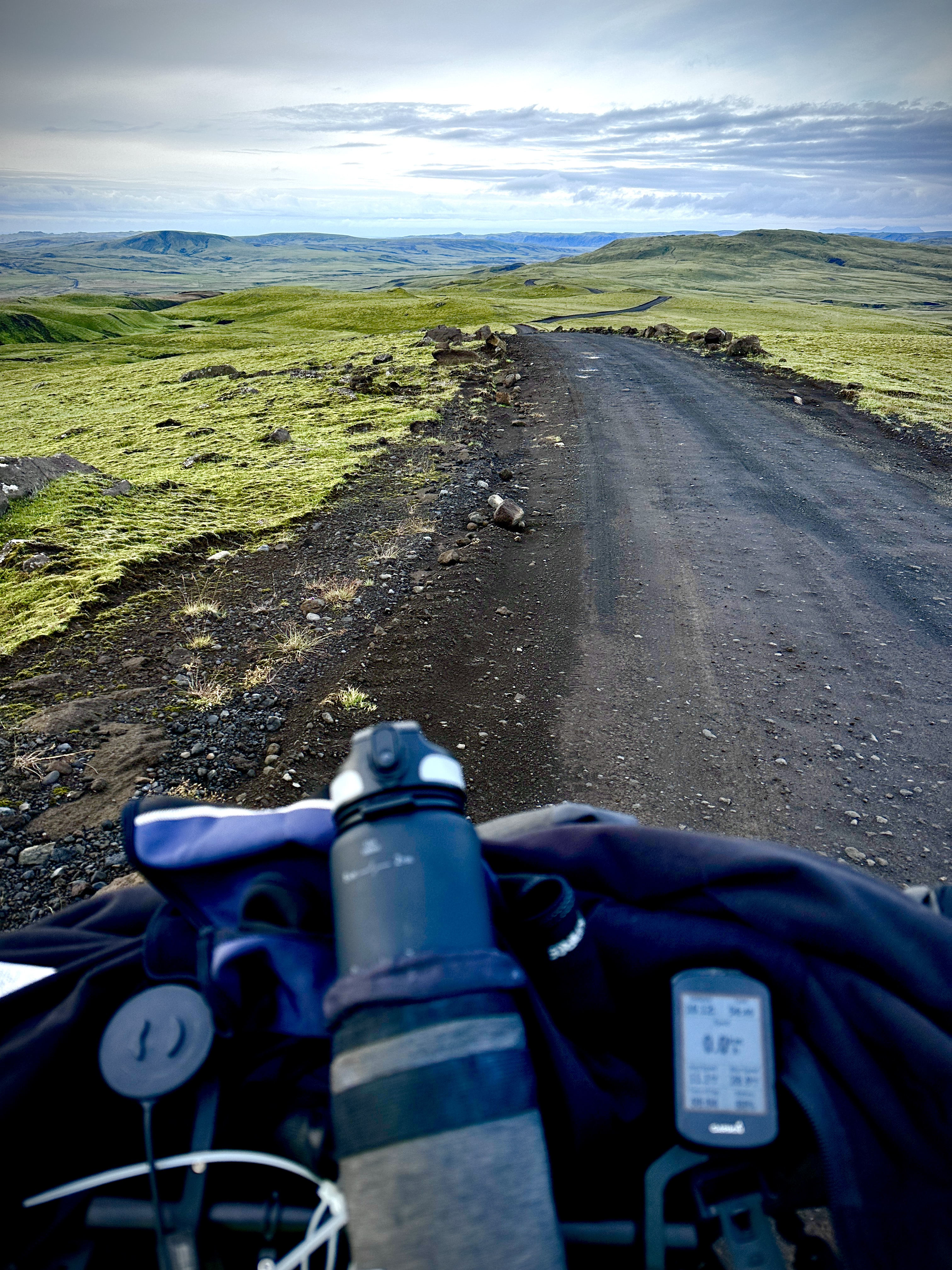
As I approach the finish line, I’m in high spirits. I roll into Vik. Denis captures my finish on camera. I complete the route in 9 days—as planned. I enjoy a well-deserved burger, pitch my tent, and unwind in the pool complex. Tomorrow, a bus to Reykjavik.
That was it. Here is my video that concludes the trip.